Overview
Fighter Ops drops you into a 2D top-down theatre and asks one simple question: how deep can you push? You pick a fighter, take off, fly sorties against waves of enemy jets, SAM sites and AAA, then come back to the hangar between runs to spend earnings on upgrades.
Each of the seven airframes — F-16 Falcon, A-10 Warthog, F-15 Eagle, F-22 Raptor, SU-57 Felon, B-2 Spirit and the experimental NGAD 6th Gen — has its own balance of HP, speed, damage, fuel, turn rate and lock range. The F-16 turns hard and burns light; the A-10 is BRRRRT incarnate; the B-2 carries AoE bombs and the NGAD packs a laser, guided drones and radar jam.
Below the dogfighting layer is a deep upgrade tree: machine gun level, fire rate, accuracy, power, range, speed, fuel tank, missiles and flares. Pilot level caps at 20. Costs scale aggressively as you climb.
How to play
- Spawn at base, take off, engage targets visible on radar.
- Earn money for kills and mission objectives.
- Return to base to refuel, repair and spend earnings in the hangar.
- Unlock heavier frames as your bank and pilot level grow.
Controls
Mobile / touch: D-pad or touch throttle and turn. On-screen FIRE, LOCK, FLARE, and frame-special buttons appear when supported. Play in landscape on phones — a compact status panel and minimap replace the desktop HUD.
Level progression
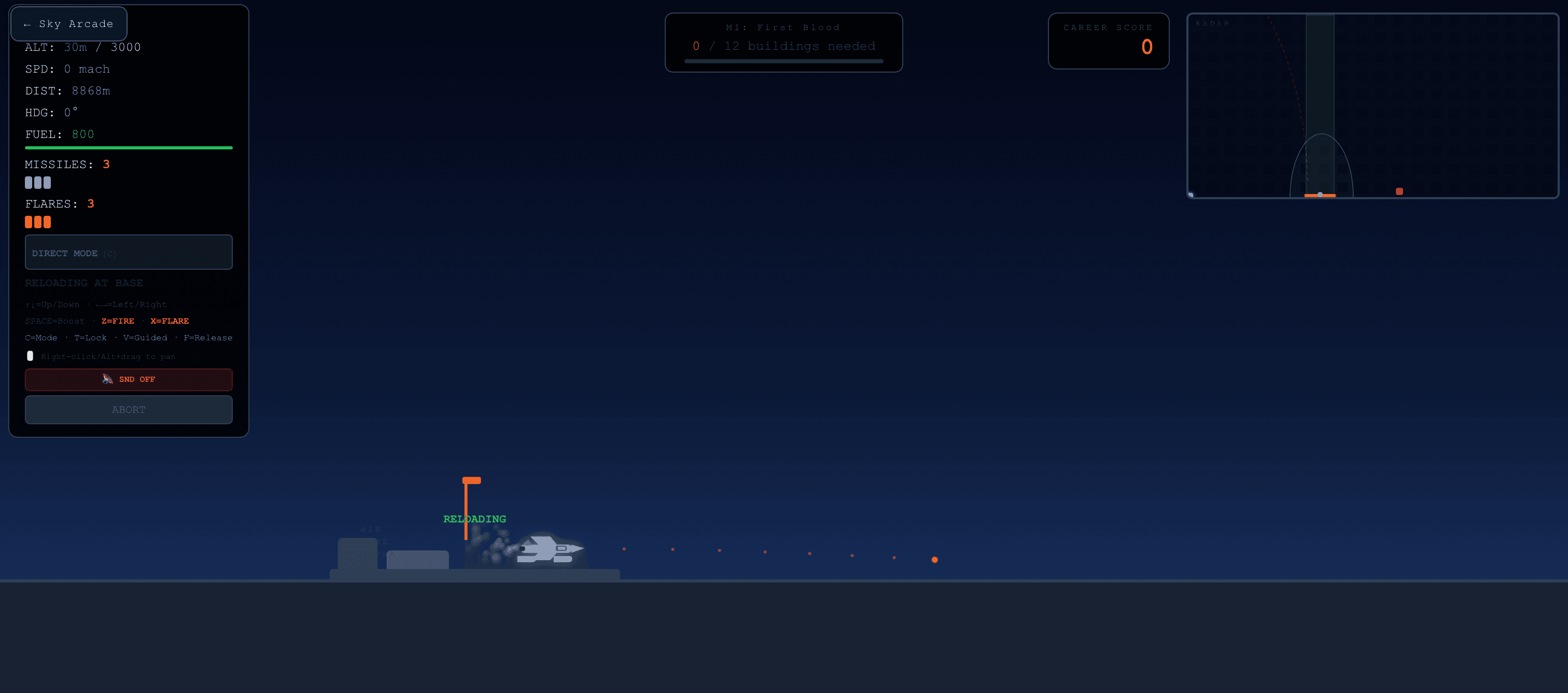
Fighter Ops runs twenty campaign levels. Each sortie has three phases: BASE (takeoff prep at the allied runway), ACTIVE (destroy marked targets in the mission area), and RETURN (fly back and land to complete the level). Dying mid-sortie sends you to a retry screen; landing successfully advances your level and opens harder city layouts with more SAMs and enemy jets.
Frame personalities
Each airframe is tuned to a different style. The F-16 rewards tight turns and short missile windows. The A-10 wants you flying low and slow into ground packs. The F-22 and SU-57 are the all-rounders with thrust-vectoring agility. The B-2 trades dogfight survival for AoE bombs — fly it like a strike platform, not a fighter. The NGAD frame is the late-game answer: laser primary, guided drone payload, and a radar-jam pulse.
Upgrade strategy
Early game, prioritise fire rate and accuracy on your default frame — they multiply every shot you take. Mid-game, fuel tank lets you push deeper before turning around. Missiles and flares cap at 2 / 1 respectively — saves you cash for the next frame. Pilot levels feed passive bonuses up to 20.
Economy and hangar
Cash drops from destroyed targets and mission completion. The hangar sells seven airframes and nine upgrade lines with escalating costs. Upgrades are per-career — they persist across sorties. Pilot level (max 20) adds passive bonuses on top of frame and upgrade choices. If your save disappears, it is because browser data was cleared — there is no cloud backup.
Tips & strategy
- Don't buy a heavier frame before maxing the cheap upgrades on your current one. A maxed F-16 outclasses a stock F-22.
- Flares (F) burn when you are already being chased. Pre-popping them is wasted.
- A-10 players: ignore enemy jets above your altitude band, dive on ground packs, leave dogfights to fighters.
- NGAD drone runs hit hardest when paired with a SAM-jam pulse — drones fly through unharmed.
Frequently asked questions
How many airframes can I unlock?
Seven: F-16, A-10, F-15, F-22, SU-57, B-2 and NGAD 6th Gen. Each has its own cost gate.
Is there a mission system, or is it endless?
Each sortie is a self-contained run with objective targets; clearing them earns cash. Hangar progression is the persistent layer.
Does pilot level affect frame stats?
Yes — pilot level (max 20) feeds passive bonuses that stack on top of your frame and upgrade choices.
Ready to play Fighter Ops?
Free, no install, no account. Click below to launch the game directly in your browser.
▶ PLAY FIGHTER OPS